TL;DR:
In July 1938, Toronto witnessed significant antifascist protests against the National Unity Party rally, highlighting a broad coalition of political groups united against fascism. This event marked a key moment in establishing an antifascist consensus in Canada, which later contributed to the suppression of domestic fascist movements as the country joined World War II.
Synopsis:
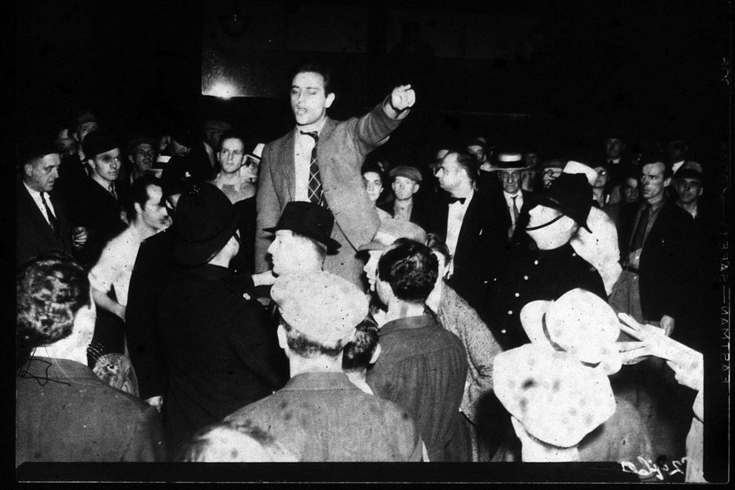
On July 4, 1938, Toronto police were on high alert for a rally at Massey Hall, where leaders of Canadian fascist groups planned to merge into the National Unity Party (NUP), generating significant public controversy. Antifascist groups, which included a range of political affiliations such as communists, Trotskyists, anarchists, liberals, conservatives, and social democrats, organized to protest against the fascists. The antifascist sentiment was fueled by fear of fascist aggression in Europe and concerns about growing domestic fascism. Key figures and groups such as Mayor H.A. Stewart of Kingston and the Canadian Corps opposed fascist meetings, highlighting the widespread resistance to fascism.
Despite a legal free-speech debate, fascists gathered at Massey Hall under police protection, delivering antisemitic speeches and enforcing blue-shirted security. Simultaneously, antifascist rallies were organized across Toronto, drawing thousands, including a significant gathering led by the Communist Party’s Canadian League for Peace and Democracy at Maple Leaf Gardens. Ideological differences did not stop diverse groups from uniting against fascism, including the Co-operative Commonwealth Federation (CCF) and Trotskyists. This moment represented a shift towards a broader antifascist consensus in Canada, which became official with the country’s entry into World War II, leading to the arrest of fascist leader Adrien Arcand.
The historical context underscores the challenge of building antifascist coalitions, requiring alliances among politically diverse groups. These alliances highlight the critical understanding that democracy is vulnerable and that unity against a common threat is paramount. Although fascism was never deeply rooted in Canada, the potential for growth during domestic crises existed until antifascist sentiment coalesced, halting its advancement.
Leave a Reply